University of South Carolina

The Magnetic
Universe Lab

We measure the magnetic fields that thread galaxies across cosmic time and the dusty structures that feed their supermassive black holes — with infrared polarimetry, submillimeter interferometry, and the sharpest imaging JWST can deliver.

Who we are

About the Lab

I am Enrique Lopez-Rodriguez, Associate Professor in the Department of Physics and Astronomy at the University of South Carolina. I am an extragalactic astronomer, and my group works on one overarching question: understanding the effect of magnetic fields in galaxies across depth and cosmic time — in depth, from the parsec-scale torus around a black hole to the multi-phase interstellar medium and the diffuse circumgalactic medium; in cosmic time, from nearby, well-resolved galaxies to the first billion years.

On galactic scales, magnetic fields are a component of the interstellar medium that is routinely left out of the story of galaxy evolution — not because it is unimportant, but because it is hard to measure. We measure it. Using far-infrared polarimetry from SOFIA/HAWC+, submillimeter polarimetry from ALMA, and radio synchrotron observations, we map the strength and structure of magnetic fields across the multiphase interstellar medium of nearby galaxies, from cold molecular clouds to hot galactic outflows.

On nuclear scales, we study the dusty and molecular torus that obscures active galactic nuclei. With JWST aperture-masking interferometry we now resolve these structures down to a few parsecs, separating the disk that feeds the black hole from the dust entrained in the winds it drives back out.

Enrique Lopez-Rodriguez

Enrique Lopez-Rodriguez · Associate Professor
Jones 603 · elopezrodriguez@sc.edu

What we work on

Research Focus

Three threads run through everything in the group: magnetism, accretion onto supermassive black holes, and the polarimetric instruments sensitive enough to see either one.

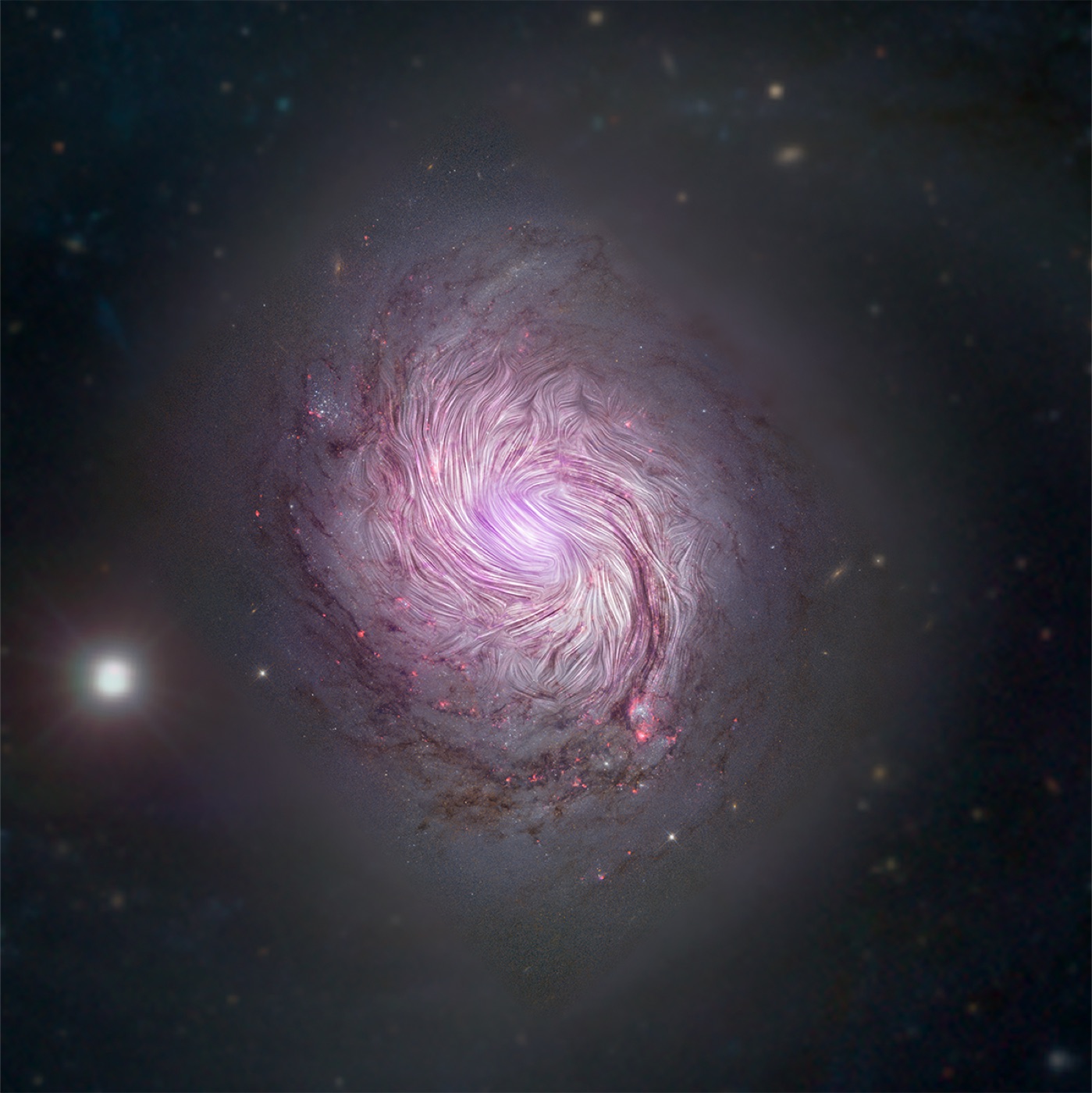
Magnetic field streamlines over the spiral galaxy NGC 1068
Extragalactic magnetism

Magnetic fields in galaxies

Mapping the strength and structure of magnetic fields in the multiphase interstellar medium of nearby galaxies, and quantifying how much they actually matter for galaxy evolution.
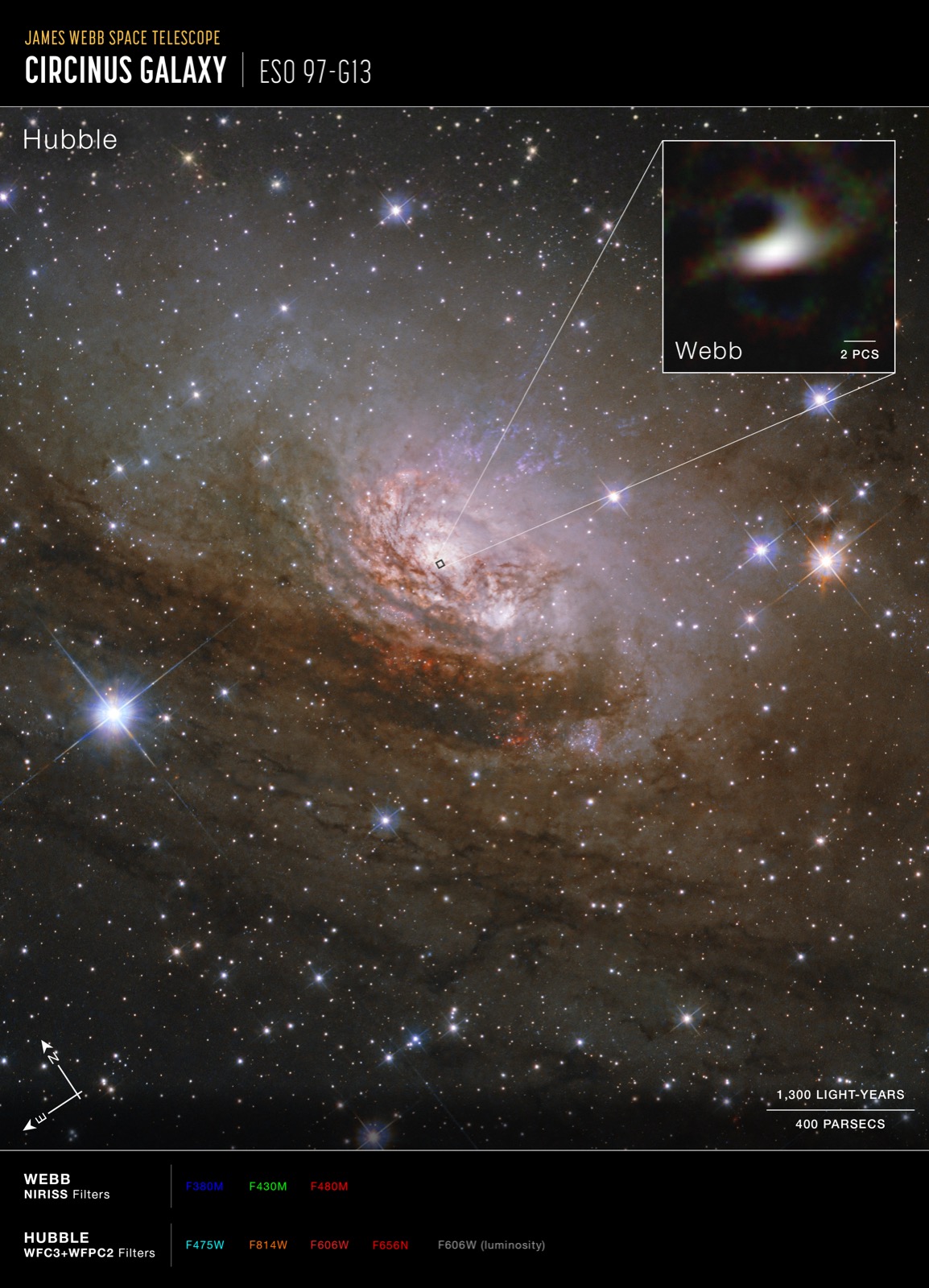
JWST interferometric image of the dusty torus in the Circinus galaxy
Active galactic nuclei

Feeding & feedback at parsec scales

Resolving the dusty torus around supermassive black holes with JWST aperture-masking interferometry, and separating the material that feeds the nucleus from the dust its winds push away.

Infrared polarimetric instruments
Instrumentation

Polarimetric instruments

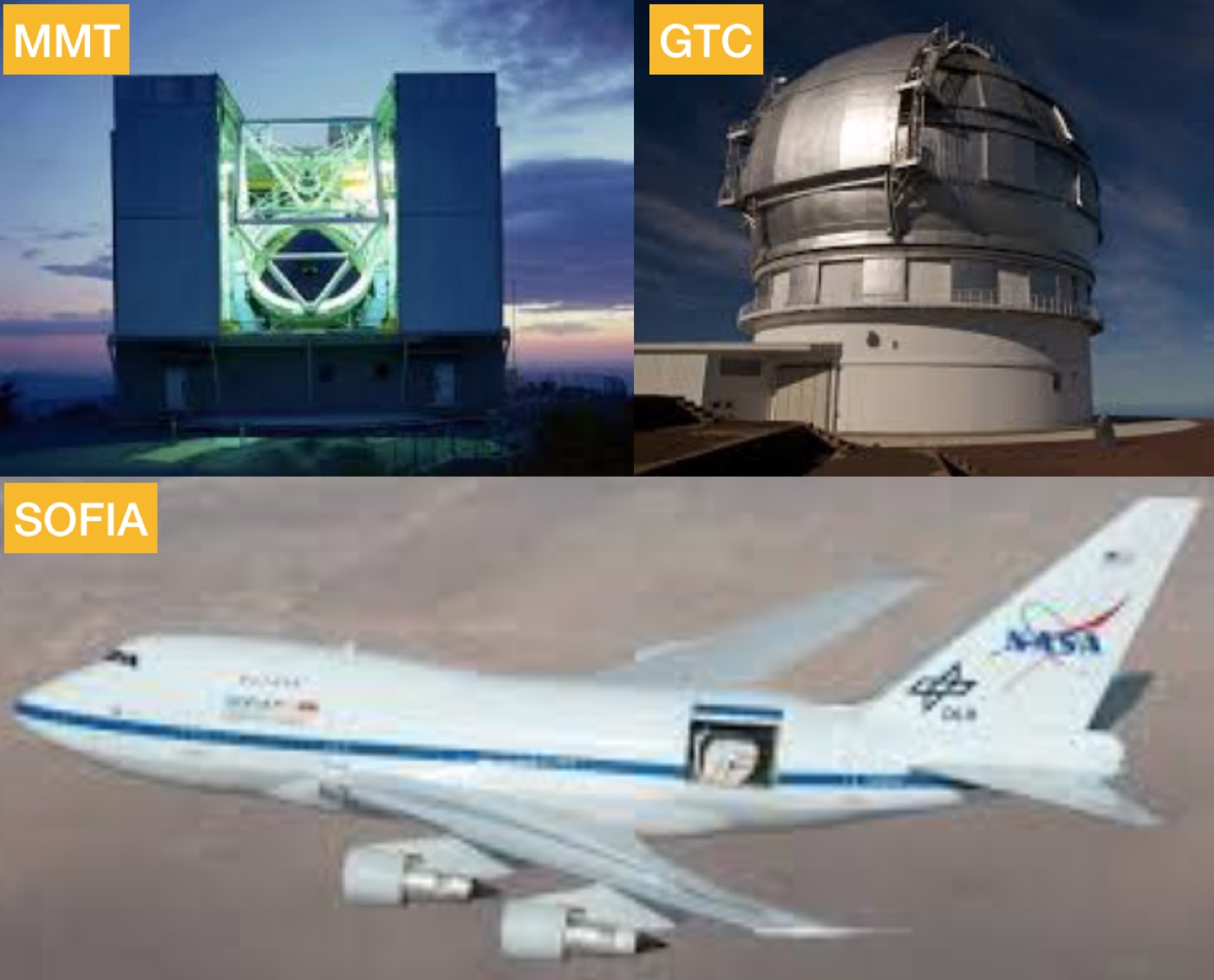
Commissioning and science verification of infrared polarimeters — HAWC+ on SOFIA, MMT-Pol, CanariCam — and defining the polarimetric case for the next generation of 30-m telescopes.

Flagship surveys

Large Programs

The lab anchors three large observing programs, from nearby galaxies to the first billion years.

SOFIA Legacy Program

SALSA

The Survey of extragALactic magnetiSm with SOFIA (PI: Lopez-Rodriguez & Mao) builds a comprehensive empirical picture of the magnetic field strength and structure in the multiphase interstellar medium of galaxies. SALSA delivered the first resolved far-infrared polarimetric maps of nearby galaxies, and its public data releases remain the reference set for extragalactic magnetism in the far-infrared.

JWST Cycle 5 · GO 9652

Baselines

GATOS collaboration logo A project within the GATOS collaboration

Baselines (PI: Lopez-Rodriguez) is our JWST aperture-masking interferometry (AMI) survey of nearby active galaxies. Following AMI imaging of Circinus and NGC 1068, we are observing 16 AGN at 3.8–4.8 µm and 1.6–8.9 pc resolution to quantify the role of the hot dusty phase in feeding and feedback within 50 pc of the black hole.

ALMA · NSF AAG #2510741

Magnetic Fields in DSFGs

This program traces the magnetic fields in strongly gravitationally lensed dusty star-forming galaxies (DSFGs) across cosmic time (z = 2–7). The lens magnifies and stretches each galaxy into arcs, making polarization measurements possible in sources that would otherwise be far too faint.

9io9 image: ALMA (ESO/NAOJ/NRAO)/J. Geach et al.

Openings

Work With Us

We host postdoctoral researchers, graduate students, undergraduates, and high school interns. If you want to measure magnetic fields in galaxies or resolve the dust around a supermassive black hole, get in touch.