Research

One overarching question drives our research: understanding the effect of magnetic fields in galaxies across depth and cosmic time — from the parsec-scale torus around a supermassive black hole to the multi-phase interstellar medium and the diffuse circumgalactic medium, and from nearby galaxies to the first billion years.

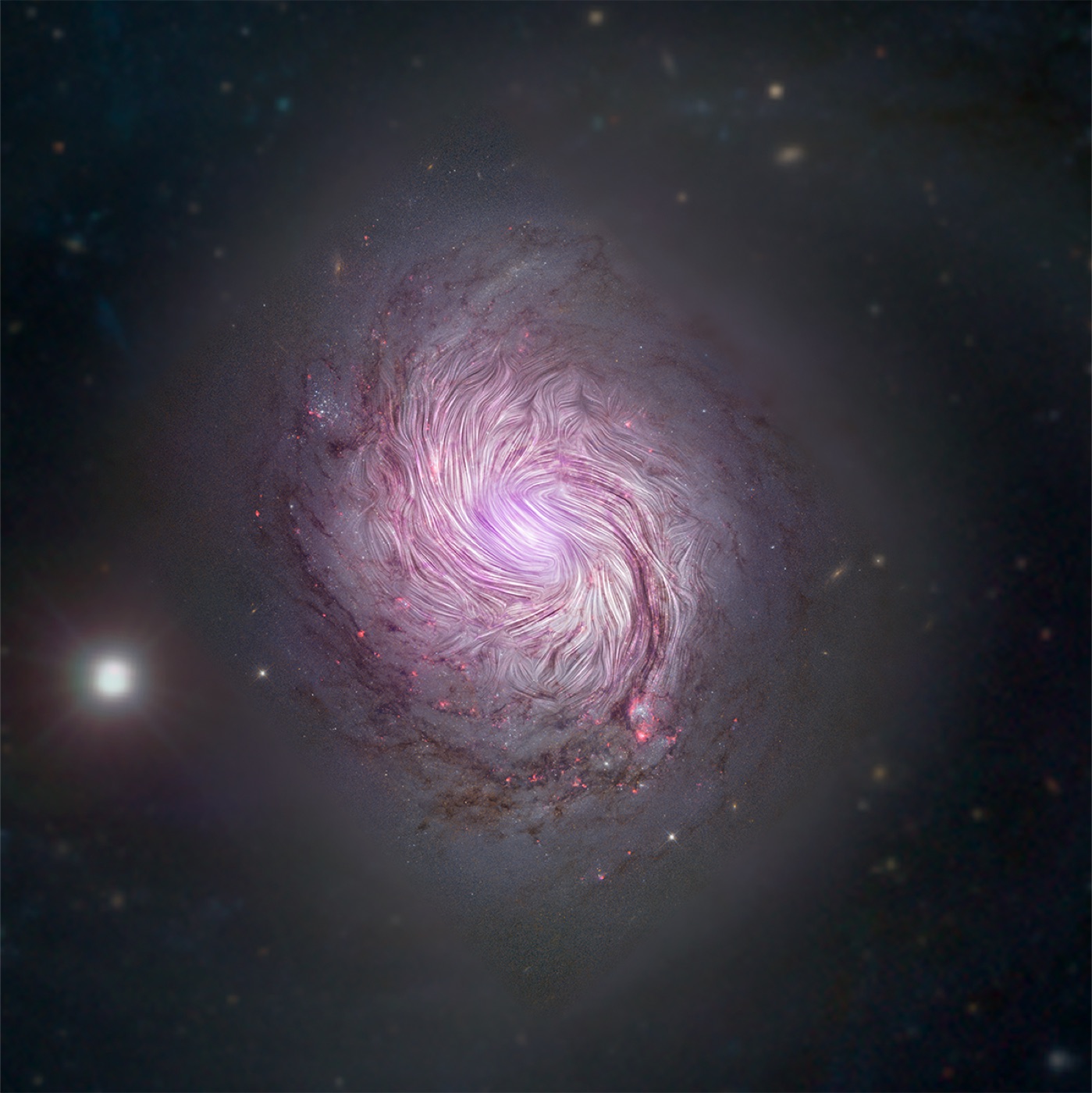
Magnetic field streamlines tracing the spiral arms of NGC 1068, measured with SOFIA/HAWC+

Far-infrared polarimetry with SOFIA/HAWC+ reveals a spiral magnetic field in NGC 1068. Image: NASA/SOFIA/Lopez-Rodriguez et al.

SALSA · SOFIA Legacy Program

Extragalactic Magnetism

Magnetic fields are the component of the interstellar medium most often left out of galaxy evolution — not because they are unimportant, but because measuring them across a galaxy is hard. SALSA, the Survey of extragALactic magnetiSm with SOFIA (PI: Lopez-Rodriguez & Mao), was built to fix that.

SALSA produced the first systematic far-infrared polarimetric survey of nearby galaxies, tracing magnetically aligned dust grains in the cold and dense interstellar medium. By combining those maps with radio synchrotron and submillimeter polarimetry, we separate the magnetic field of the diffuse warm medium from that of the dense molecular medium — and find that the two are genuinely different. The survey underpins our ongoing work on how magnetic fields regulate star formation, shape spiral arms, and channel gas toward galactic nuclei.
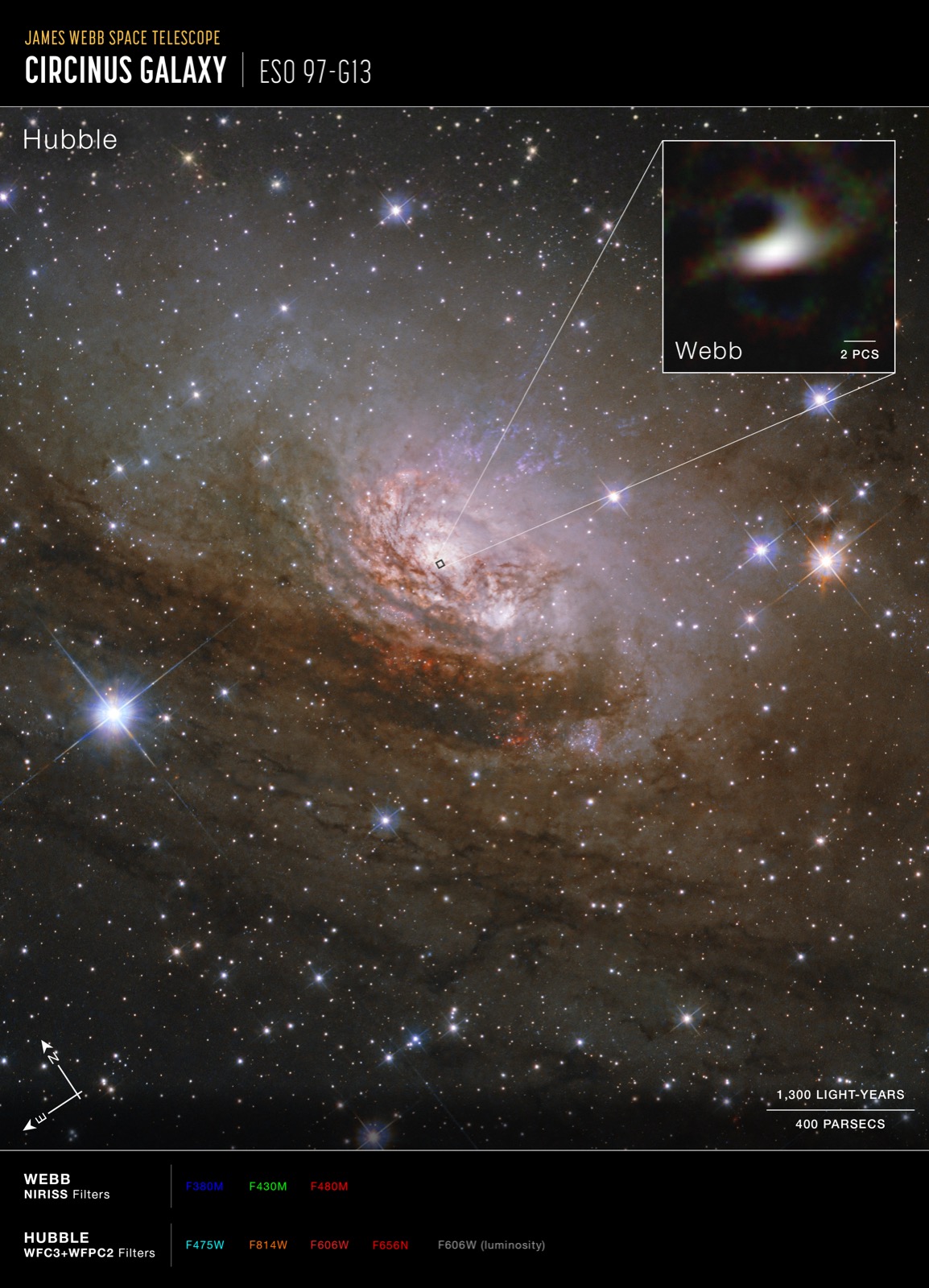

Hubble view of the Circinus galaxy with an inset of the JWST aperture-masking interferometry image of its central dusty disk

The central 10 pc of the Circinus galaxy resolved at 0.08″ with JWST/NIRISS AMI. Image: NASA/ESA/CSA/STScI/Lopez-Rodriguez et al.

JWST Cycle 5 · GO 9652

Baselines: A JWST AMI Survey of Nearby AGN

GATOS collaboration logo A project within the GATOS collaboration

The dusty and molecular torus is one of the most elusive structures in active galactic nuclei, yet it controls both accretion onto the black hole and the feedback returned to the host galaxy. Near-infrared observations are sensitive to hot dust at 500–1500 K, which traces the sublimation radius, the base of the torus walls, and dusty winds. The 3–5 µm excess seen in AGN since the early 1990s still has no settled explanation.

Baselines uses JWST's aperture-masking interferometry mode on NIRISS to attack this directly. AMI improves angular resolution roughly two-fold over conventional imaging — 0.07″ versus 0.14″ at 4.3 µm — while minimizing PSF artifacts. We are observing 16 nearby AGN at 3.8–4.8 µm, reaching spatial resolutions of 1.6–8.9 pc, to quantify how much of the hot dusty phase is feeding the nucleus and how much is being blown out of it. The targets span Centaurus A, M51, NGC 1808, NGC 2903, NGC 1672, NGC 6300, NGC 4826 and NGC 5236, among others.

The pilot, AMI imaging of the Circinus galaxy, resolved the 5 × 3 pc dusty disk that feeds its active nucleus (Nature Communications, 2026). The goal of Baselines is a new observational signature of the hot dust for the build-up and feedback stages of accretion within 50 pc of a supermassive black hole.

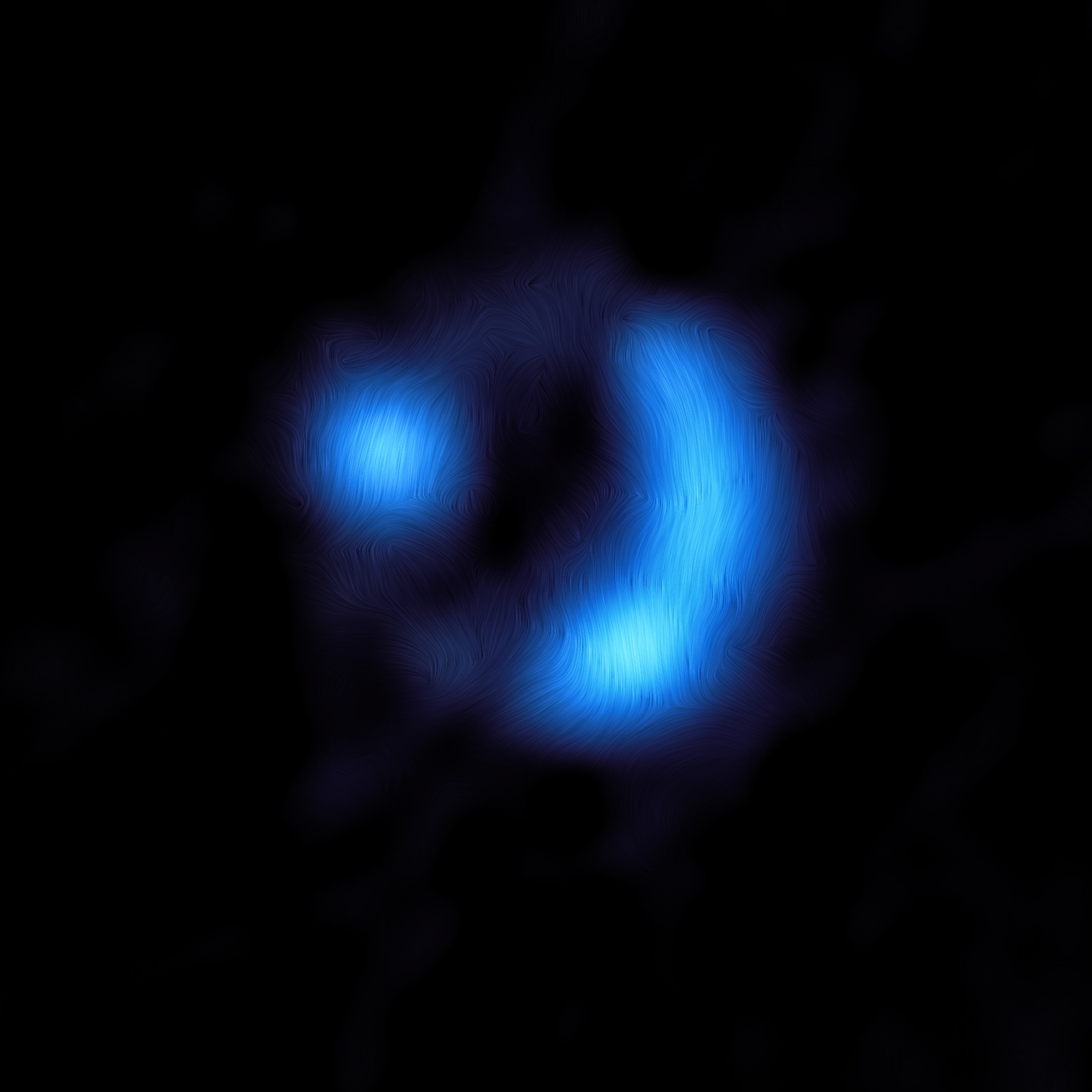
ALMA image of the strongly lensed dusty star-forming galaxy 9io9, showing the orientation of its magnetic field

ALMA view of 9io9, a strongly lensed dusty star-forming galaxy at z = 2.6, with the orientation of its magnetic field. Credit: ALMA (ESO/NAOJ/NRAO)/J. Geach et al.

ALMA · NSF AAG #2510741

Magnetic Fields in Dusty Star-Forming Galaxies

This program traces the magnetic fields in strongly gravitationally lensed dusty star-forming galaxies (DSFGs) across cosmic time, from z = 2 to 7.

Main findings so far: a large-scale ordered magnetic field co-spatial with the disk of a galaxy at z = 2.6, and an ordered magnetic field co-spatial with the overlap region of a merging galaxy.

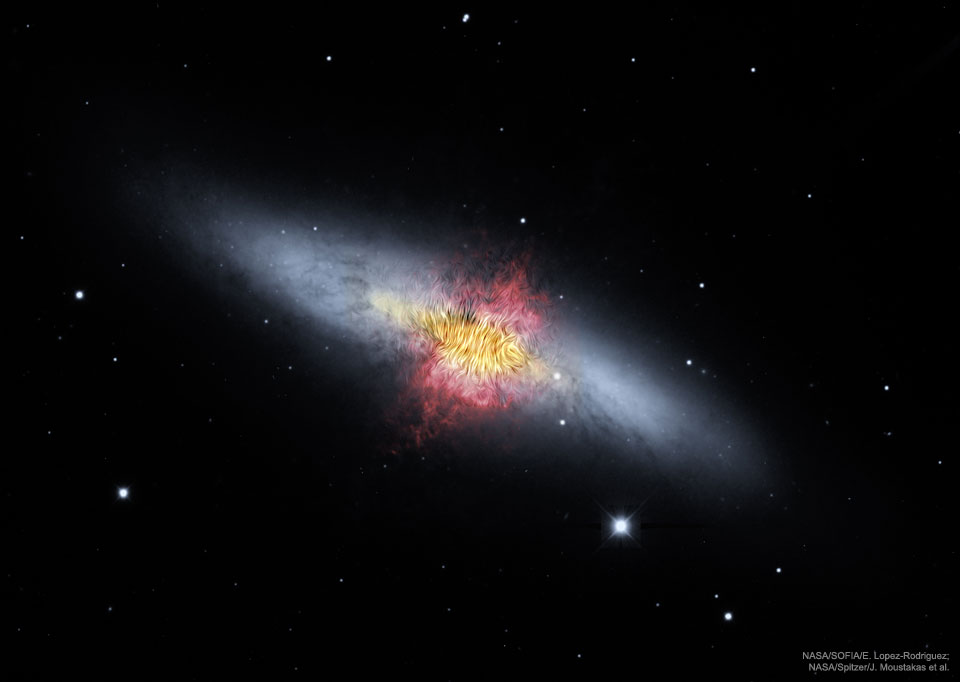
Magnetic field in the galactic outflow of M82, the Cigar galaxy

The magnetic field along the galactic outflow of M82. Image: NASA/SOFIA/ESA/Hubble.

Starburst galaxies

Magnetic Fields in Galactic Outflows

In starburst galaxies the magnetic field runs parallel to the galactic outflow rather than along the disk. Working with solar physicists, we developed an approach to quantify the effect of outflows on galactic magnetic fields and concluded that the field in M82 is open — a direct magnetic channel between the starburst core and the intergalactic medium, with consequences for how energetic particles escape their host galaxies.

We have since shown that starburst galaxies can be identified by their polarized spectral energy distributions, and that thermal polarization in the disk can be separated from that in the outflow.

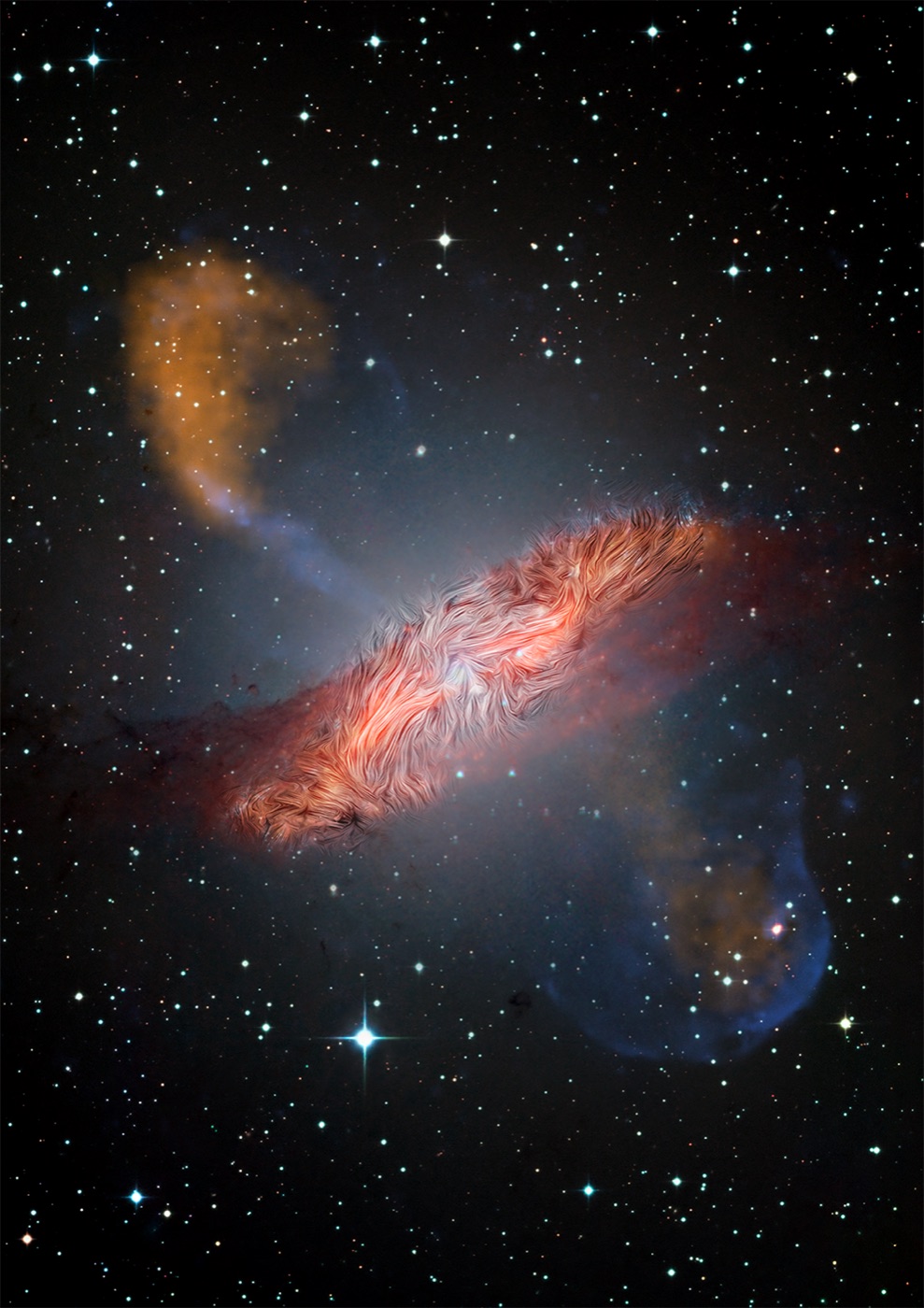
The warped magnetic field of the molecular disk of Centaurus A

The warped magnetic field of Centaurus A's molecular disk — Nature Astronomy best cover of 2021. Image: NASA/SOFIA/Lopez-Rodriguez et al.

Galaxy mergers

Magnetism in Merger Remnants

Centaurus A carries a warped magnetic field that tightly follows its fast-rotating, distorted molecular disk. The field is amplified by small-scale turbulent dynamo action driven by the merger itself — direct evidence that galaxy interactions reorganize and strengthen magnetic fields on kiloparsec scales. We find the same signature in the Antennae galaxies, where an ~8.9 kpc well-ordered field connects both galaxies.

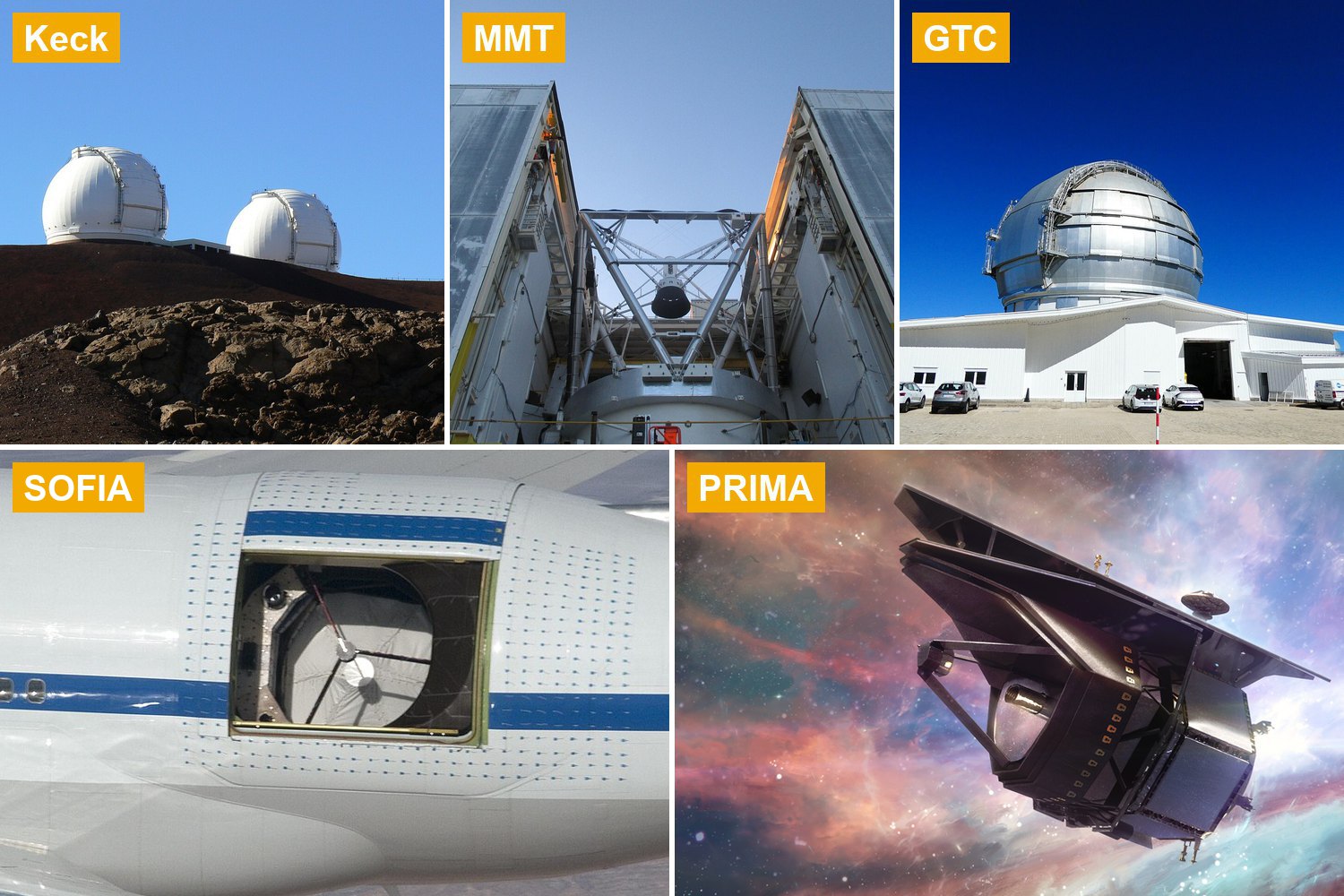
The telescopes behind our polarimeters: Keck, MMT, GTC, SOFIA, and the PRIMA probe mission

The polarimeters behind the science: NIRC2-Pol/Keck, MMT-Pol/MMT, CanariCam/GTC, HAWC+/SOFIA, and the PRIMA probe. Images: Keck — Kevstan, CC BY-SA 3.0; MMT — bourdeet, CC BY-SA 4.0; GTC — Syrio, CC BY-SA 4.0; SOFIA — Carla Thomas/NASA; PRIMA — NASA/JPL-Caltech.

Instrumentation

Infrared Polarimetric Instruments

None of this works without instruments that can measure a few percent of polarization in the infrared. I supported the commissioning and early-science products of:

  • HAWC+ — the far-infrared polarimeter onboard SOFIA.
  • MMT-Pol — a near-infrared polarimeter working with the adaptive optics system on the 6.5-m MMT.
  • CanariCam — the mid-infrared polarimeter on the 10.4-m Gran Telescopio CANARIAS.
  • NIRC2-Pol — the near-infrared polarimetric mode of NIRC2 on the 10-m Keck telescope, commissioned in 2026 and available to the community since semester 2025B.

For SOFIA we also implemented and characterized the on-the-fly-mapping (OTFMAP) polarimetric mode of HAWC+, which cut observing overheads by a factor of 2.34 and improved sensitivity by a factor of 1.80 relative to chop-nod polarimetry — the change that made SALSA feasible.

Looking ahead, I co-chair the polarimetry team of PRIMA, the PRobe far-Infrared Mission for Astrophysics selected as NASA's next probe mission, helping define the capabilities of its far-infrared polarimeter.

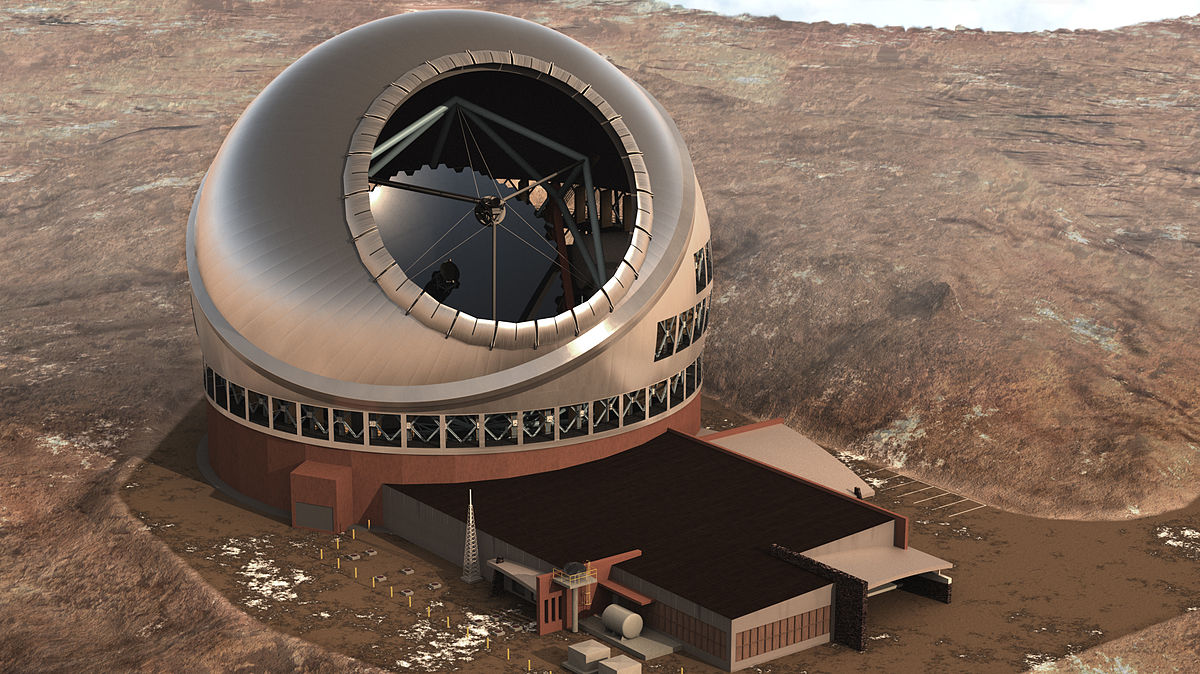
Next-generation 30-m class telescope

Polarimetry in the era of 30-m telescopes.

Next generation

30-m Class Telescopes

I am a member of the TMT International Science Development Teams for Supermassive Black Holes and for Time Domain astronomy, working to establish the case for polarimetric capabilities on the next generation of extremely large telescopes. I am PI of the Key Science Project Towards a Dynamical AGN Tori within the TMT/GMT collaboration, and a member of MICHI, a proposed mid-infrared instrument for TMT.

Full Publication Record

Selected first-author papers, with live counts pulled from NASA/ADS.